Why TikTok Ads in 2026 for e-commerce, apps and local brands
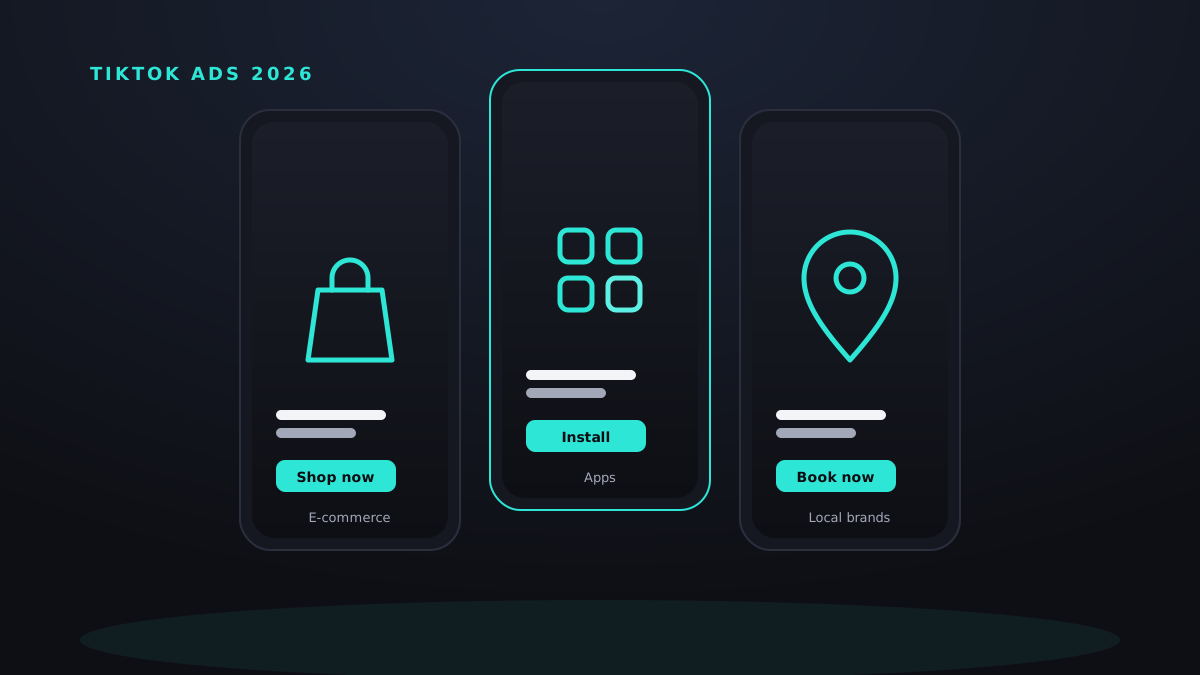
Every January someone asks whether TikTok is still worth the effort, and every year the answer gets more specific. In 2026 the question is no longer whether people are there. It is whether your kind of business can turn attention into customers at a cost that makes sense. This article walks through what the audience looks like now, how buying intent shows up on a platform built for entertainment, and what e-commerce brands, apps and local businesses can realistically expect.
Who is actually on TikTok in 2026
The stereotype of a teenage app has not survived contact with the data. TikTok has publicly described its US audience as more than 170 million people, and the fastest-growing groups over the past few years have been adults in their thirties, forties and fifties. Parents use it for recipes and home projects, tradespeople use it to show their work, and small business owners use it as a free storefront. Sessions are long and content is consumed with sound on, which changes how an ad has to be built.
For an advertiser, three things matter about this audience. First, it is broad enough that interest and behavior targeting works for almost any US consumer category. Second, it is engaged in a way that rewards good creative: a video that holds attention is shown to more people at a lower cost, regardless of the advertiser's budget. Third, the audience has learned to buy inside the app. The ownership questions that hung over the US version of the app for several years have been settled, and advertisers in 2026 can plan with a longer horizon than they could before.
Intent on TikTok: search, comments and Shop
TikTok is a discovery platform, but intent is everywhere once you know where to look. Users type product and problem queries into TikTok search the way an earlier generation typed them into a search engine, and the results page mixes organic videos with ads. Comments on product videos are full of purchase questions: where to buy, does it work for this, how much does it cost. TikTok Shop turned that behavior into a checkout that never leaves the app, and video shopping ads let advertisers attach a product card to the video people are already watching.
The practical consequence is that TikTok is not only a top-of-funnel channel. A campaign can reach search behavior, retarget people who watched most of a video and close the sale in Shop or on a landing page, with the TikTok Pixel and Events API reporting back what happened. Smart+ campaigns automate much of the targeting across those stages, and in 2026 they are the default starting point for many accounts rather than an experiment.
E-commerce: the feed and the storefront are the same place
For e-commerce brands the case is the strongest. A product that demonstrates well on camera, priced where an impulse purchase is plausible, with a creator or founder willing to explain it honestly, has everything the format wants. TikTok Shop adds a frictionless checkout and shows your product to people who have bought similar things. Video shopping ads pull from your catalog so a single video can sell several items.
What e-commerce brands underestimate is the production requirement. Creative fatigue on TikTok is measured in days and weeks, not months. A brand that can produce a few new videos a week, from its own team, from creators or from Spark Ads boosting organic posts, can keep costs stable. A brand that shoots one polished commercial a quarter cannot. The second point is measurement: with the Pixel and Events API properly installed, purchase values flow back to Ads Manager and the algorithm can optimize for revenue rather than for clicks.
Apps: installs with signal, not just volume
App advertisers have been on TikTok for years because the format matches the product. The user is already holding a phone, the ad shows the app in use, and the install is one tap away. In 2026 the difference is the quality of the signal. With a mobile measurement partner or TikTok's own app events integration, campaigns can optimize for registrations, trials, subscriptions or any in-app event rather than for installs alone, which means the algorithm learns who actually uses the app instead of who taps a button.
Apps also benefit from the platform's taste for demonstrations. A fifteen-second screen recording with a voice explaining a real use case often outperforms a produced trailer. Spark Ads from users who posted about the app carry social proof that a brand account cannot manufacture, and they keep the comments, which become a second layer of persuasion.
Local brands: a radius, a face and a before and after
Local service businesses are the least obvious fit and often the most pleasant surprise. A roofer, a dentist, a gym, a restaurant or a landscaper can target a radius around the business, show a real before and after, and let the owner or a staff member talk to the camera. The content costs almost nothing to make and it feels native, because it is.
The constraints are real. Local audiences are smaller, so budgets have to be modest and creative has to rotate often enough that the same people are not shown the same video every day. Lead flows need to be instant: a short form, a booking link or a tap to call, confirmed on the spot, because a TikTok viewer who has to wait for a callback has moved on. When those pieces are in place, TikTok fills calendars in markets where search ads have become expensive and crowded.
What TikTok does not do well
Honesty about the limits saves money. Very high-ticket B2B purchases with long buying committees can be reached on TikTok, but attribution is slow and the creative has to educate rather than sell. Businesses that cannot show their product or process, or whose team refuses to appear on camera and will not work with creators, will struggle. Categories restricted by TikTok's advertising policies, including parts of health, finance and alcohol, need a careful policy review before any budget is committed. And no business should expect the platform to fix a weak offer or a slow website; TikTok traffic is impatient and leaves a bad page faster than search traffic does.
If you want to know whether your business fits before spending a dollar, tell us about it through our contact page. We will reply with an honest read within one business day, including the cases where TikTok should not be your first channel.